Related Articles





In the past decade, we’ve grown accustomed to thinking of artificial intelligence (AI) as something that lives in the cloud: big data-centers, vast compute farms, tens of millions of parameters, and high-latency connections sending data back and forth for processing. But a powerful shift is well underway: AI is increasingly being embedded into the devices themselves. In other words, intelligence is moving “to the edge” — into your phone, your earbuds, a smart speaker, a wearable, even appliances around the house.
What device-AI means for consumers?
This shift has multiple implications — good, interesting, and some to watch.
Better responsiveness and offline capability
When intelligence lives on the device, tasks such as speech recognition, face detection, noise-cancellation adaptation, context-aware alerts can happen instantly and reliably—even if your internet connection is weak or offline. For example: your smart earbuds adapt to noise in your commute automatically, fast.
Enhanced privacy and security
Since less user data needs to leave the device, there’s less exposure to external servers or cloud vulnerabilities. On-device AI means more control over your personal sensor data (voice, motion, face) and reduces the blast radius in case of breaches.
Lower latency & power savings
Edge AI can reduce the round-trip time to the cloud and save power (less radio usage, less need for high-throughput streaming). For IoT devices or battery-powered wearables this is a meaningful benefit.
Personalization & adaptation
Devices can learn user behaviour and environment context locally: pre-empt what you’ll do, automatically adjust settings, adapt to you–without sending your every action to a remote server. For example: a remote that learns your favourite channels.

Real-world examples: Everyday electronics getting smarter
Let’s look at some concrete device categories where embedded AI is already making a difference.
• Smartphones & mobile devices
Modern smartphones increasingly embed AI features on device: cameras with real-time object detection, on-device translation, contextual suggestions, voice assistants that don’t rely solely on the cloud. One example: Samsung’s “Galaxy AI” suite includes both local and cloud processing to support translation, image editing, context-aware workflows.
Smartphone makers are explicitly marketing “AI built-in” as a differentiator.
• Wearables & earbuds
Wearables (smartwatches, fitness bands, AI-enabled earbuds) benefit greatly from on-device intelligence: they can analyse motion, ECG/PPG signals, noise environment, user habits, all continuously and locally. The market research cited above found that in wearables, on-device AI handles ~62 % of operations.
• Smart home & IoT devices
Smart speakers, home-security cameras, smart thermostats: these all are moving beyond “just connected” toward “connected and intelligent locally”. For example: a smart door-bell might detect faces, differentiate familiar vs. unfamiliar persons, send condensed alerts instead of full video streams. On-device inference helps reduce bandwidth and privacy risk.
• Smart appliances / vehicles / industrial
Even beyond the home: automotive systems, home appliances (washers/dryers with built-in AI), industrial sensors: these are embedding AI to make decisions locally: anomaly detection, predictive maintenance, context awareness. The trend of AI-embedded cellular modules points toward a future where almost every network-enabled device has an “AI brain” built in.
Recommended devices and developer modules to explore
If you’re a tech-savvy user or hobbyist wanting to experiment with device-AI — or simply interested in buying a product that embodies the trend — here are some good suggestions:
Apple MacBook Pro 14 (M5): A premium laptop that emphasizes on-device AI, showing that even high-end computing devices are shifting to embed AI rather than rely on cloud for everything.
NVIDIA Jetson Nano Module 16 GB eMMC: A compact development board designed for embedded-AI and edge computing — great for prototyping your own “thinking device”.
NVIDIA Jetson TX2 NX Module: More powerful embedded AI module for higher-performance applications in devices or robotics.
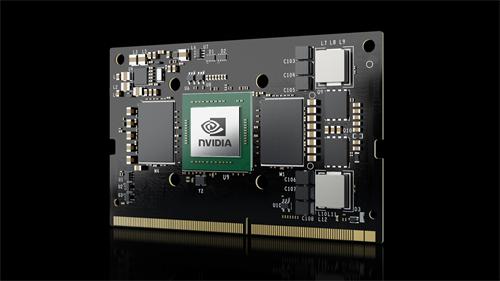
(Image from NVIDIA, the copyright belongs to the original author)
Maixduino AI Development Board K210: A budget friendly AI+IoT board that lets developers experiment with tiny-ML on microcontrollers.
M5Stack Atom Echo Smart Speaker Dev Kit: A dev kit oriented toward voice/AI applications (smart speaker, voice assistant), illustrating how everyday devices integrate AI locally.
Artificial Intelligence for Edge Computing (book): If you want to dive deeper into the theory of edge AI, this book is a useful resource.
TinyML in Practice (book): A hands-on guide for deploying ML models on constrained devices—perfect if you want to understand the under-the-hood of device-AI.
Embedded Systems 4th Edition (book): A textbook that covers embedded systems including the shifts toward AI/IoT/edge – helpful for the broader context.
Whether you’re a consumer just wanting a smarter device, or a developer building your own, the hardware and resources to explore embedded AI are widely accessible now.
Why this really matters: long-term implications?
Beyond gadgets and convenience, embedding AI in devices has deeper significance.
• Redefining device intelligence
The shift means devices become more autonomous, context-aware, adaptive. A smart thermostat doesn’t just respond to your commands; it learns your habits, your home’s microclimate, and anticipates. A wearable knows not just your heartbeat, but what it means in context. This transforms the relationship between user and device: from “tool” to “assistant”.
• Privacy and trust become product features
With increasing consumer awareness about how data is used, devices that advertise “smart but private” (i.e., most processing stays on-device) will have a competitive edge. On-device AI allows vendor differentiation around privacy and local control.
• Edge intelligence scales the IoT vision
The full promise of the Internet of Things (IoT) depends not just on connectivity, but on intelligence at the endpoint. When every sensor, actuator, appliance, wearable can think locally, the system becomes more resilient, scalable, and efficient. For smart homes, smart cities, industrial IoT — on-device AI is a cornerstone.
• New business and monetization models
Manufacturers and service providers will shift from “cloud charge everything” to “embedded intelligence as a feature”. For example: devices may offer upgradeable AI capabilities, subscription-based local intelligence, federated learning across fleets of devices, etc.
• Challenges for regulation & ethics
When intelligence sits inside your toaster or watch, new questions emerge: How transparent is the decision-making? Who updates the model? Can biases creep in when training locally? Who is accountable when the device “decides” (lighting, security, sleep-tracking, health alerts)? Regulators and designers will need to adapt.
• Environmental and energy benefits
Because local processing can reduce data streaming, network use, cloud energy cost, there are sustainability upsides. Embedded AI has the potential to be more energy-efficient, especially when hardware is optimised for inference.
The journey of AI is moving from the cloud-centric era to a device-centric era. What once required big servers can now live in your pocket, your wrist, your home, or your car. The benefits—responsiveness, privacy, personalization, efficiency—are real. The challenges—resource constraints, security, update, transparency—are non-trivial. For consumers, this means smarter devices; for developers, this means new architectures; for society, it means a shift in what “smart electronics” mean.
So the next time you pick up a smart gadget, ask: “Does it just connect to the cloud to get smarter, or is the ‘brain’ actually on the device?” Because increasingly, the answer matters.
References:
https://semiconductorinsight.com/blog/apple-and-amazon-bring-edge-ai-to-everyday-devices-transforming-consumer-privacy
https://www.daily-teck.com/post/ai-in-everyday-life-how-smart-gadgets-in-2025
https://www.ainvest.com/news/ai-driven-consumer-electronics-frontier-disruptive-innovation-market-capture-2510
https://counterpointresearch.com/en/insights/ai-embedded-cellular-modules-to-cross-25-of-all-iot-module-shipments-by-2030
