Related Articles




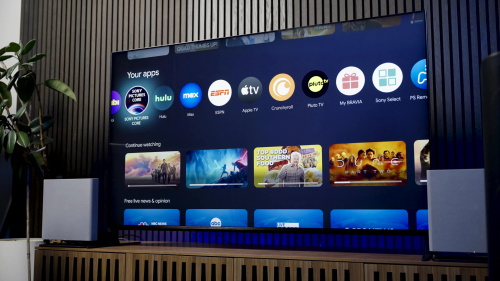
In recent years, the premium zone of the TV market has seen an enthusiastic push toward Mini-LED back-lighting — a technology that offers significantly greater brightness, richer HDR performance, and finer local dimming control than standard LED-LCD sets. According to display-tech reviews, Mini-LED TVs can deliver substantially higher peak luminance and impressive contrast improvements by packing many more dimming zones behind the panel.1
So, if you’re considering an upgrade to one of the new flagship Mini-LED models, this piece will help you ask the right questions: What exactly does “flagship” mean in this context? Which features matter most (brightness, gaming performance, HDR zones)? And most importantly — is it worth the investment for you?
Why Mini-LED? What’s the upgrade benefit?
Mini-LED is a refined version of back-lit LCD (LED) TV technology where the back-lighting uses much smaller LEDs, allowing for many more “local dimming zones” and greater brightness/control than traditional LED-LCDs.
What this means in practice?
Much higher peak brightness, which is especially useful in bright rooms or for HDR content.
Better contrast than standard LED-LCDs thanks to finer local dimming control (i.e., you can dim small regions of the screen rather than large zones).
Less risk of OLED-type burn-in (which is a concern for some heavy static-image use).
For gamers: many flagship Mini-LED models now offer high refresh rates (120 Hz, 144 Hz or more), HDMI 2.1 support, Variable Refresh Rate (VRR), etc. (which is part of the “upgrade” story).
Where limitations remain (and you should know this):
Mini-LED TVs are still back-lit LCDs — that means they don’t quite match the “each pixel individually lit” black-level precision of OLEDs. Some halo or blooming (light bleeding around bright objects on dark backgrounds) can still appear.
Viewing angles: depending on the panel type (often VA panels in many Mini-LEDs), you may see contrast/colour drop off when off-axis.

Cost: the premium Mini-LED sets are expensive (though dropping) and the added benefits may only be very visible in certain use-cases (bright room, HDR content, large screen).
If you’re in a bright room, want very high brightness HDR, or are a gamer looking for top-tier refresh/VRR performance, a flagship Mini-LED is a compelling upgrade. If you’re in a darker room, sit fairly central, and your current TV does fine, the benefits may be less dramatic.
What’s new in 2025 flagships?
Many of the latest models push peak brightness well beyond what typical LED-LCDs achieved — for example the Hisense U8QG series reportedly reached ~3,337 nits peak and ~733 nits full-screen HDR in one review.
The number of local-dimming zones has exploded: e.g., the TCL QM8K series claims up to ~3,800 zones (in its largest sizes) and “up to 65% higher peak brightness” vs previous gen.
Gaming-centric features are now standard in top models: native refresh rates of 144 Hz (and even up to 165 Hz), HDMI 2.1 inputs, VRR (Variable Refresh Rate), ALLM (Auto Low Latency Mode), and support for both Dolby Vision and HDR10+. For example, the Hisense U8QG supports 4K 165Hz input.
Smart / ecosystem features are more advanced: Many models now integrate strong sound systems (e.g., built-in speakers tuned by premium audio brands), thin bezels (“ZeroBorder” designs), and wide support for HDR formats and smart platforms.
Top flagship Mini-LED TV models worth considering
Here are eight strong candidates (covering a range of budgets and brands). All are Mini-LED (or QD-Mini LED) for this “upgrade” context.
Hisense U8 Series Mini-LED (2025): A standout in the “big upgrade value” camp. One review notes it “hit 3,337 nits” and proved “brilliant value” for what it offered.
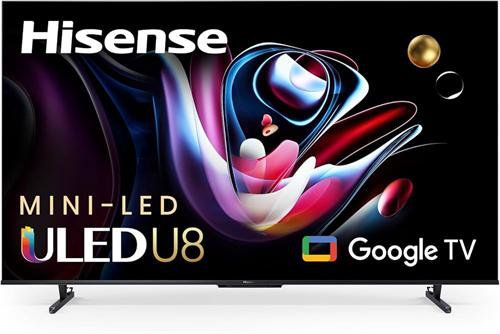
(Image from Amazon.com, the copyright belongs to the original author)
TCL QM8K QD-Mini LED (2025): Flagship from TCL: high specs (144 Hz, many local dimming zones) and large-screen options (65″, 85″ and up).
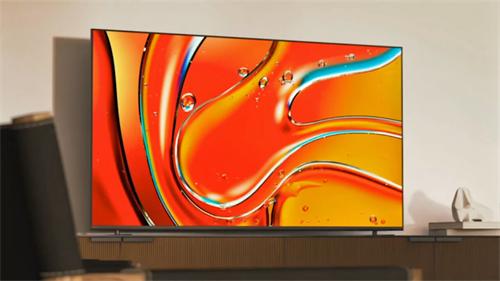
Sony Bravia 7 Mini-LED (2024/25): Premium image brand (Sony) bringing Mini-LED (XR Backlight Master Drive, etc.). One resource lists it among the best Mini-LEDs of 2025.
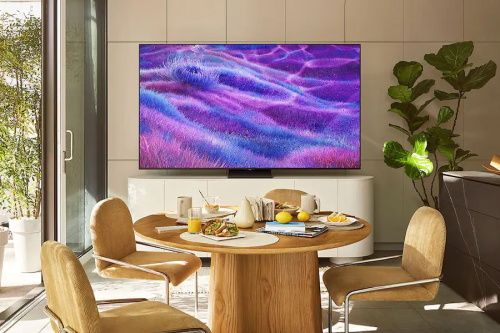
LG QNED evo AI QNED92A Mini-LED (2025): LG’s take on Mini-LED with AI processing, QNED branding; a strong option for those preferring LG’s ecosystem.
Samsung Neo QLED QN90F Mini-LED: Samsung’s high-end Neo QLED (Mini-LED) offering; offers Neo Matrix lighting, etc. If you’re brand-loyal Samsung, this is a strong pick.
Hisense U8 Series (alternate SKU): Another SKU/variant of the Hisense U8 line — good for considering size/price alternatives.
LG QNED evo AI QNED85A Mini-LED (2025): A slightly more moderate size/price version of LG’s Mini-LED offering.
Samsung Neo QLED QN80F Mini-LED: Samsung brand, but slightly more affordable “entry‐premium” Mini-LED offering; good if you want high end but don’t need the ultra-top spec.
Is it worth your upgrade? (and when to wait)
When deciding if you should pull the trigger, consider:
When an upgrade makes sense?
You currently have an older LED-LCD (non-Mini LED) TV with mediocre brightness/hdr; going to a flagship Mini-LED is a big leap in picture quality.
You often watch in a bright room with lots of ambient light/sunlight — Mini-LED’s high brightness advantage shows up more.
You are a gamer and want features like 144 Hz refresh, HDMI 2.1, ultra-low input lag, VRR – many of the new models provide that.
You’re buying a large screen (75″, 85″ or bigger) where differences in picture quality are more noticeable.
You want future-proofing: many are 2025 models with strong HDR, back-light, gaming, smart features.
When maybe you should wait or skip:
If your room is fairly dark (evening viewing) and you’re just upgrading from a decent TV, OLED or not, you might not notice the full benefits of Mini-LED’s brightness.
If you’ve just recently purchased a high-end TV (within last 2-3 years) the incremental improvement may not justify cost.
If budget is critical: flagship Mini-LEDs still cost a premium; you might get better value by slightly earlier generation or slightly lower model.
If you sit off-axis a lot (room layout) and viewing angles matter more than brightness → then OLED may sometimes be more suitable because of better viewing-angle performance.
Buying considerations: tech trade-offs and what to evaluate
Contrast & black levels: Despite major improvements, Mini-LED still uses a back-light (albeit with many smaller LEDs) rather than each pixel self-illuminating (as in OLED), so you still face possible blooming/halo effects in very high contrast scenes.2
Viewing angles: Many Mini-LEDs use VA-type panels which tend to have narrower viewing angles compared to OLED or IPS panels. If you sit off-axis a lot (living room with wide couch layout) the contrast and colour might degrade.
Room ambient light: If you have a very bright room (large windows, daylight), high brightness is very beneficial; in a controlled dark home-cinema room the advantage is less dramatic (and OLED may still have the edge in black levels).3
Size & distance: The value of the upgrade rises with screen size and viewing distance: on smaller sets (50-65″) or if you view from relatively far, the incremental gains may be less perceptible.
Budget & longevity: Flagship models with all the top specs cost significantly more. If your current TV is <3 yrs old and performs well, you may gain only marginally rather than an across-the-board transformation.
Future-proofing: Looking ahead, features like high refresh rates, advanced gaming support, wide HDR format support and large screen sizes make the upgrade more justifiable — you’ll use those extra specs for longer.
Sources:
1: https://www.reviewed.com/televisions/features/what-mini-led-tv
2: https://www.rtings.com/tv/learn/what-is-mini-led
3: https://www.smarthomesounds.co.uk/blog/faqs/mini-led-vs-oled-vs-micro-led-everything-you-need-to-know
References:
https://www.makeuseof.com/is-mini-led-better-than-oled
https://www.wepc.com/tv/compare/mini-led-vs-oled
https://science-technology.news-articles.net/content/2025/09/29/mini-led-vs-oled-what-s-the-best-tv-technology.html
https://www.techradar.com/news/mini-led-vs-oled
https://currently.att.yahoo.com/att/looking-affordable-feature-packed-tv-120000036.html